A mouse line generated by the Mary Lyon Centre at MRC Harwell’s Genome Editing Mice for Medicine (GEMM) programme has helped researchers demonstrate proof of concept for an RNA-directed therapy targeting a rare neurodegenerative disorder that currently has no treatment. The findings were recently published in the journal Brain.
Hereditary sensory neuropathy type 1 (HSN1) is a rare neurodegenerative disorder characterised by prominent sensory loss, neuropathic pain, and various degrees of limb weakness in advanced cases. Loss of sensation can lead to painless injuries with slow wound healing and eventually result in distal amputations.
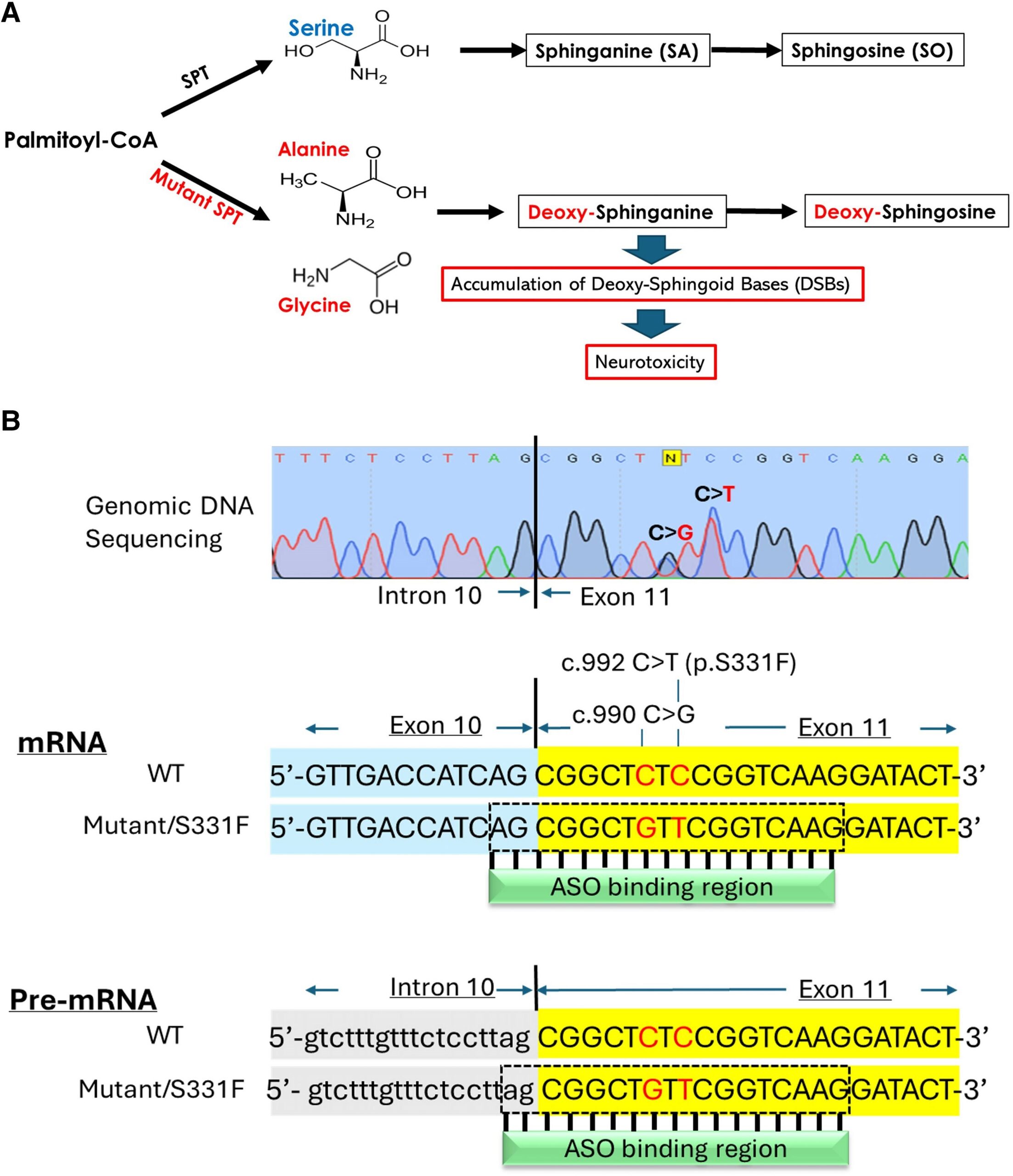
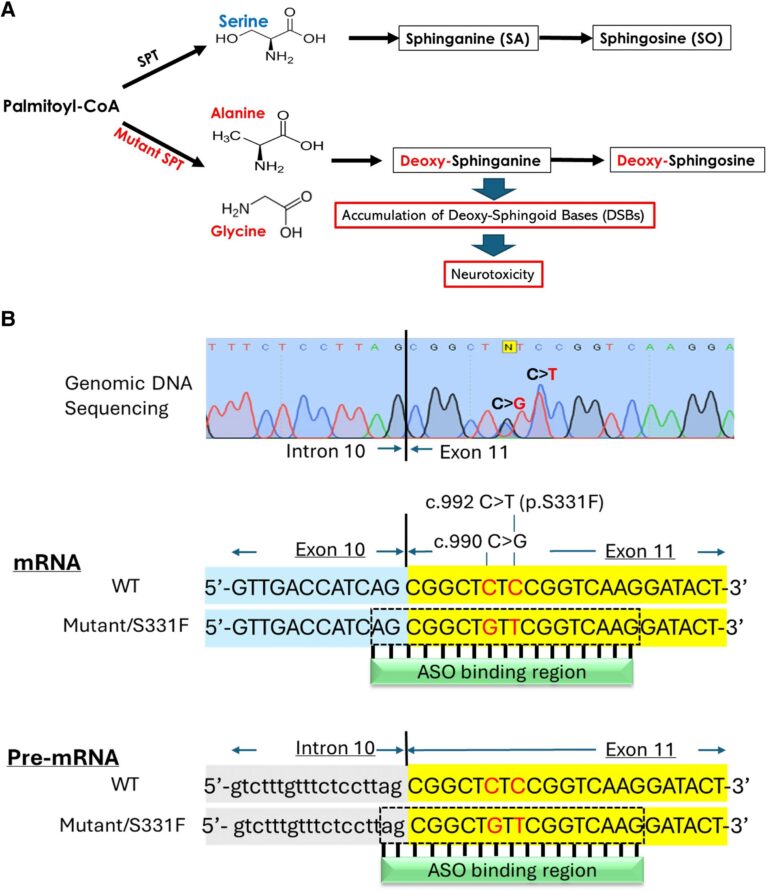
One of the most common causes of HSN1 is mutations in the gene SPTLC1 (Serine Palmitoyl Transferase Long Chain base subunit 1), which encodes a subunit of the serine palmitoyl transferase (SPT) enzyme. SPT normally catalyses the initial step in sphingolipid biosynthesis. This is an important process, as sphingolipids are a ubiquitously expressed class of lipid that are involved in cell adhesion, intercellular signalling, and membrane dynamics. HSN1-associated mutations cause a shift in substrate specificity for SPT to cause it to produce 1-deoxy-sphingolipids that cannot be degraded and are toxic to neurons.
As HSN1 patients have one normal copy of SPTLC1 along with the mutant form, selective silencing of the mutant form to prevent production and accumulation of toxic 1-deoxy-sphingolipids could be beneficial. RNA-targeted antisense oligonucleotides (ASOs) could provide this solution and have been used successfully to treat other conditions associated with a gain-of-function mutation, including amyotrophic lateral sclerosis.
To test this idea, Prof David Bennett of the University of Oxford, and his collaborators, Prof Mary Reilly at UCL and Prof Thorsten Hornemann at the University of Zurich, successfully applied to our fourth GEMM call in 2018. The GEMM programme gives the UK science community the opportunity to apply to have a new clinically relevant mutant mouse model generated and validated to support their work. Since it launched in 2016, the programme has generated 132 novel mouse lines that are being used to answer important biomedical research questions.
Prof Bennett and his collaborators applied to the GEMM programme to generate a new mouse line with the HSN1-associated S331F mutation in the Sptlc1 gene. This mutation was selected over others, because it is linked with a particularly severe phenotype, including disease onset before the age of 10, in contrast with other mutations where symptoms normally appear in early adulthood. Comparison of this model with previously generated models could help to provide an understanding of the symptomatic variability of the disease.
After designing and testing a number of ASOs with cultured fibroblasts derived from the S331F mouse line, they started their in vivo work with single-dose subcutaneous injections in adult and neonatal S331F mice. One of the two ASOs tested was seen to selectively silence mutant transcripts in both adult and neonatal mice, without significantly reducing expression from the wild type allele. Importantly, they also were able to observe that ASO treatment led to reduced levels of toxic 1-deoxy-sphingolipids in the blood of S331F mice, which shows both that it should have an impact on disease and that toxin levels in the blood can be a useful biomarker to measure ASO efficacy.
Although symptoms generally only appear in HSN1 patients in early adulthood, it is likely that harm from the accumulation of 1-deoxy-sphingolipids begins in childhood. Fortunately, early genetic diagnosis in children with an affected parent means that it is possible to start treatment early without waiting for symptoms to develop, which should provide more benefit to the patient. The capacity for ASOs to selectively silence the mutant allele in the S331F mouse provides strong evidence for the benefit of developing ASO therapies for patients with HSN1, a rare disease with no current treatment options.
This project provides an example of the impact that our GEMM programme is making in pre-clinical research. Securing funding for in vivo research has never been more challenging and generation of a new mouse model requires a significant upfront investment. The GEMM programme is making an important contribution in this area as it provides researchers with expertly generated, high-quality, validated mouse models that can strengthen grant applications and accelerate progress to better understand human disease and develop new treatments.